The Gift You're Allowed to Give Yourself This Holiday Season: Boundaries
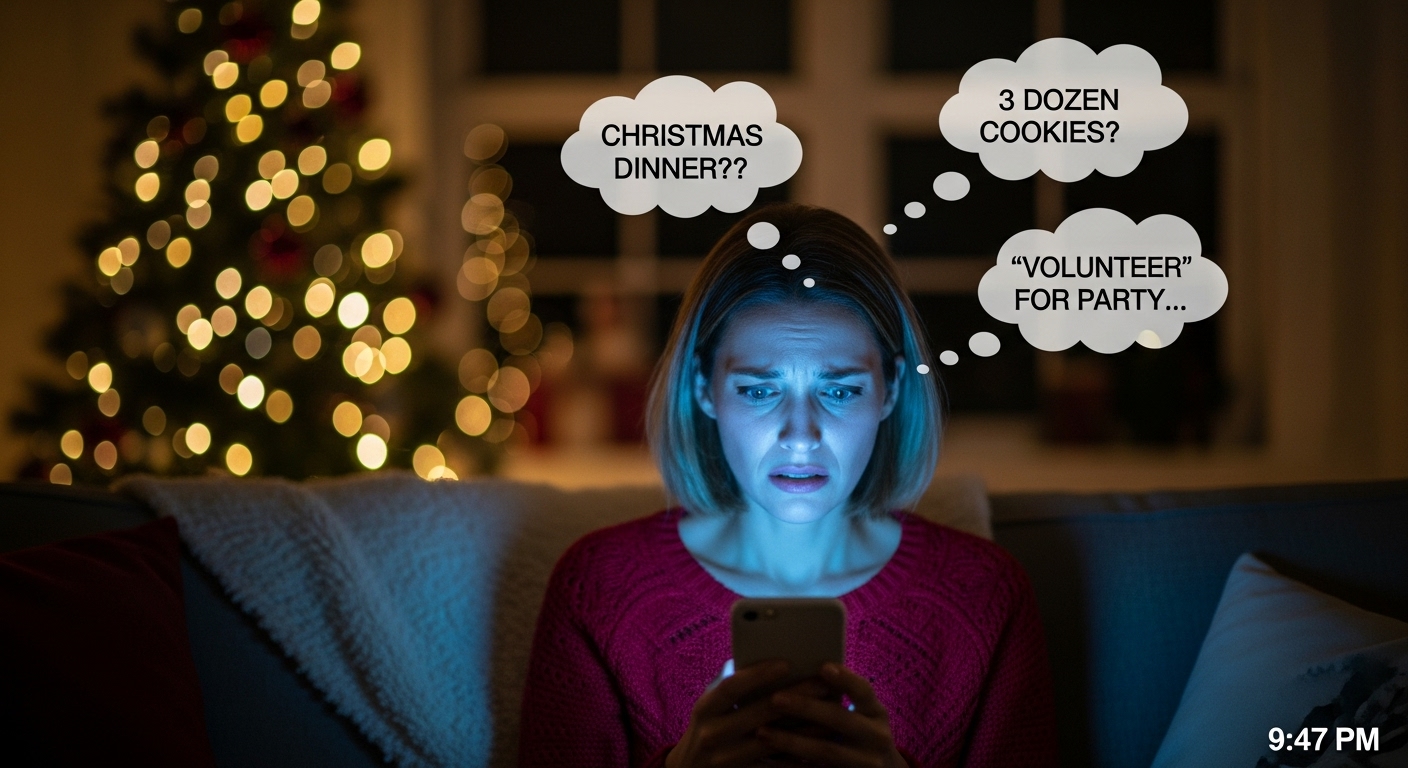
It's 9:47 PM on a Friday in early December, and you're staring at your phone. Another text just came in from your sister asking if you can host Christmas dinner this year. Your mother-in-law wants to know if you'll bake three dozen cookies for the church fundraiser. Your boss "gently suggested" you volunteer to organize the office holiday party. And somewhere in the back of your mind, a quiet voice is whispering that you're already stretched too thin.
But saying no feels impossible. So you type back, "Sure, I can make it work," even though your chest tightens as you hit send.
If this sounds familiar, you're not alone. The holidays, for all their magic and meaning, can also become a minefield of obligations, expectations, and emotional exhaustion. And for many of us, the idea of setting boundaries feels selfish, unkind, or downright impossible.
But here's what I've learned, both through my work in brain health and through my own journey: boundaries aren't selfish. They're essential. And your brain agrees.
What Happens in Your Brain When Boundaries Are Crossed
Let's talk about what's actually happening inside your head when someone oversteps your limits or when you say yes to something you desperately want to say no to.
When a boundary is violated, your amygdala (the part of your brain responsible for detecting threats and triggering your stress response) immediately goes into high alert. It doesn't matter if the threat is a charging bear or your aunt asking for the third time why you're still single. Your amygdala treats both as danger. It floods your system with cortisol and adrenaline, your heart rate spikes, your muscles tense, and suddenly you're in full fight-or-flight mode.
Now, here's the problem. If you repeatedly ignore your boundaries or allow others to cross them without consequence, your stress response system stays activated. You're essentially living in a state of chronic stress, which leads to mental fog, emotional exhaustion, irritability, and eventually burnout. Your body wasn't designed to operate in crisis mode 24/7, especially not during a season that's supposed to bring joy.
On the flip side, when you set and maintain healthy boundaries, something remarkable happens. Research shows that consistent boundary-setting strengthens your prefrontal cortex, the part of your brain responsible for decision-making, emotional regulation, and self-control. It's like giving your brain a workout. The more you practice setting boundaries, the easier it becomes. Your brain literally rewires itself to make boundary-setting feel more natural.
And there's more. When you honor your limits, your cortisol levels drop. Your nervous system calms down. Your brain releases dopamine, that feel-good chemical that boosts your mood and mental clarity. In other words, boundaries don't just protect you from stress. They actively create conditions for peace.
Why Boundaries Matter (Especially During the Holidays)
The holidays amplify everything. The joy is bigger, the stress is heavier, and the expectations are sky-high. You're navigating family dynamics, financial pressures, social obligations, and the internal pressure to make everything perfect. Add in the cultural messaging that this is supposed to be "the most wonderful time of the year," and suddenly you're drowning in guilt if you're not feeling merry and bright.
This is precisely why boundaries become so critical during this season. Without them, you risk losing yourself in the chaos. You become the person who says yes to everything and ends up resenting everyone. You show up to gatherings exhausted, irritable, and emotionally depleted. And ironically, the very people you're trying to please end up getting the worst version of you.
Boundaries allow you to show up as your best self. They protect your time, your energy, and your emotional capacity so that when you do say yes, it's a wholehearted yes. When you do show up, you're present. When you do give, it comes from a place of abundance rather than depletion.
I learned this lesson the hard way. There was a season when I said yes to everything. Every holiday invitation, every baking request, every volunteer opportunity. I thought I was being generous and loving. But by Christmas Day, I was so exhausted and resentful that I could barely enjoy the moments I had worked so hard to create. It wasn't until I learned to set clear boundaries (and work through the guilt that came with them) that I actually began to experience the peace and joy I was chasing. Once I got comfortable with boundaries, life became so much more pleasant. I had energy for the things that mattered. I showed up fully instead of showing up depleted.
Practical Strategies for Setting Boundaries
Knowing you need boundaries is one thing. Actually setting them is another. Here are some practical, brain-friendly strategies that work.
Start with Clarity
Before you can communicate a boundary to someone else, you need to get clear on what your limits actually are. This requires honest self-reflection. What drains you? What fills you up? What are you willing to give, and what feels like too much?
I recommend taking 10 minutes with a journal and asking yourself these questions: What do I actually want this holiday season to look like? What traditions or activities bring me genuine joy? What feels like an obligation I'm ready to release? What relationships or situations leave me feeling depleted?
Your answers will reveal where boundaries are needed. And here's the key: your boundaries don't have to make sense to anyone else. They just have to be true for you.
Use Clear, Kind Language
Once you know what your boundary is, communicate it clearly and kindly. Avoid over-explaining or apologizing excessively. The more you justify your boundary, the more you signal that it's up for negotiation.
Instead of saying, "I'm so sorry, I know this is terrible and you're probably going to be upset, but I just don't think I can host Christmas dinner this year because I'm really overwhelmed and I feel awful about it," try this: "I won't be able to host Christmas dinner this year. I'd love to contribute in another way, like bringing a dish or helping with cleanup."
Notice the difference? The second version is clear, kind, and doesn't leave room for guilt or negotiation. It honors your limit while still offering connection.
Prepare for Pushback
Here's the uncomfortable truth: not everyone is going to like your boundaries. Some people will push back. Some will guilt-trip you. Some will act hurt or offended. This doesn't mean your boundary is wrong. It means the other person is uncomfortable with the shift.
When pushback happens, stay calm and repeat your boundary. You don't need to defend it, debate it, or apologize for it. A simple, "I understand this is disappointing, and my answer is still no," can be incredibly powerful.
Remember, your prefrontal cortex is getting stronger every time you hold a boundary in the face of resistance. You're literally building new neural pathways that make this easier over time.
Build in Buffer Time
One of the sneakiest boundary violations during the holidays is over-scheduling. You say yes to too many events, too many commitments, and suddenly your calendar is packed with back-to-back obligations. There's no space to breathe, let alone rest.
This year, try building buffer time into your schedule. If you have a holiday party on Saturday night, protect Sunday morning as a recovery window. If you're traveling to see family, block off a day before and after for rest. Treat your time like the finite resource it is.
I've found that protecting my mornings has been a game-changer. Even during the busiest holiday weeks, I guard that first hour of the day for myself. It sets the tone for everything else and reminds me that my peace matters.
Practice Saying No Without Guilt
This is the hardest one for most of us. We've been conditioned to believe that saying no is selfish, that we should always be available, always be helpful, always say yes. But saying no is not a rejection of the other person. It's an affirmation of yourself.
One strategy that helps: reframe "no" as "not right now" or "not in this way." For example, "I can't bake three dozen cookies, but I'd be happy to pick up a few boxes from the bakery." Or, "I can't make it to the party, but I'd love to grab coffee with you next week."
This allows you to honor your boundary while still maintaining connection. And over time, as you practice saying no, the guilt will lessen. Your brain will start to recognize that setting boundaries doesn't damage relationships. In fact, it often strengthens them.
How to Enforce Boundaries with Grace
Setting a boundary is step one. Enforcing it is step two. And this is where many of us falter. We set the boundary, but then we cave when someone pushes back or when the guilt becomes too heavy.
Enforcing boundaries requires consistency. If you say you're not hosting Christmas dinner, you can't cave three days later when your sister calls crying. If you say you're leaving the party at 8 PM, you have to actually leave at 8 PM, even if people are begging you to stay.
This doesn't mean you have to be rigid or unkind. It means you follow through on what you said you would (or wouldn't) do. And here's the beautiful part: the more consistent you are, the more people learn to respect your boundaries. They stop pushing because they realize it won't work.
Enforcing boundaries also means being willing to let people be disappointed. This is hard, especially if you're a people-pleaser. But their disappointment is not your responsibility to fix. You can hold space for their feelings without changing your boundary.
As a swim parent, I've watched my daughter navigate her own boundaries in the pool. There are moments when she has to decide whether to push through exhaustion or listen to her body. Whether to take on another event or protect her energy for the races that matter most. And I've seen how much stronger she becomes when she honors her limits rather than ignoring them. The same is true for us. Boundaries don't make us weak or selfish. They make us wise.
The Transformation That Happens When You Honor Your Limits
Here's what I want you to know: once you get comfortable with boundaries, everything shifts. Life becomes more pleasant. You have energy for the things that truly matter. You show up fully in the moments you choose to be present, rather than showing up depleted everywhere.
You stop resenting people because you're no longer saying yes when you mean no. You stop feeling guilty because you've learned that protecting your peace is not selfish. You stop burning out because you've built rest and margin into your life.
And the people who truly love you? They adjust. They learn to respect your limits. And often, they start setting their own boundaries too, because you've modeled what it looks like to honor yourself.
This doesn't happen overnight. Boundaries are a practice, not a one-time decision. But every time you set a boundary and enforce it, you're rewiring your brain. You're strengthening those neural pathways that make boundary-setting feel more natural. You're teaching your nervous system that it's safe to say no. You're creating the conditions for lasting peace.
The Invitation
So here's my invitation to you this holiday season: give yourself permission to set boundaries. Not because you're being difficult or unkind, but because you're being honest. Because you're protecting the peace you've worked so hard to cultivate. Because you're honoring the limits of your time, energy, and emotional capacity.
Start small. Maybe it's saying no to one event. Maybe it's leaving a gathering 30 minutes earlier than you normally would. Maybe it's asking for help instead of doing everything yourself. Whatever it is, take one step toward honoring your limits.
And when the guilt shows up (because it will), remind yourself of what's happening in your brain. Your amygdala might be sounding the alarm, but your prefrontal cortex knows the truth: boundaries are not selfish. They're essential. They're the foundation of a healthy, peaceful, joy-filled life.
You deserve to experience the holidays without burnout. You deserve to show up as your best self, not your most exhausted self. And you deserve to protect your peace, even when it's uncomfortable.
This season, give yourself the gift of boundaries. Your brain (and your heart) will thank you.
If you're struggling to set boundaries or feeling overwhelmed this holiday season, I'd love to support you. My coaching program is designed to help women like you rewire your brain for peace, clarity, and confidence. Learn more about how we can work together here.


