The Rat Park Revolution: Why Connection Matters More Than We Think
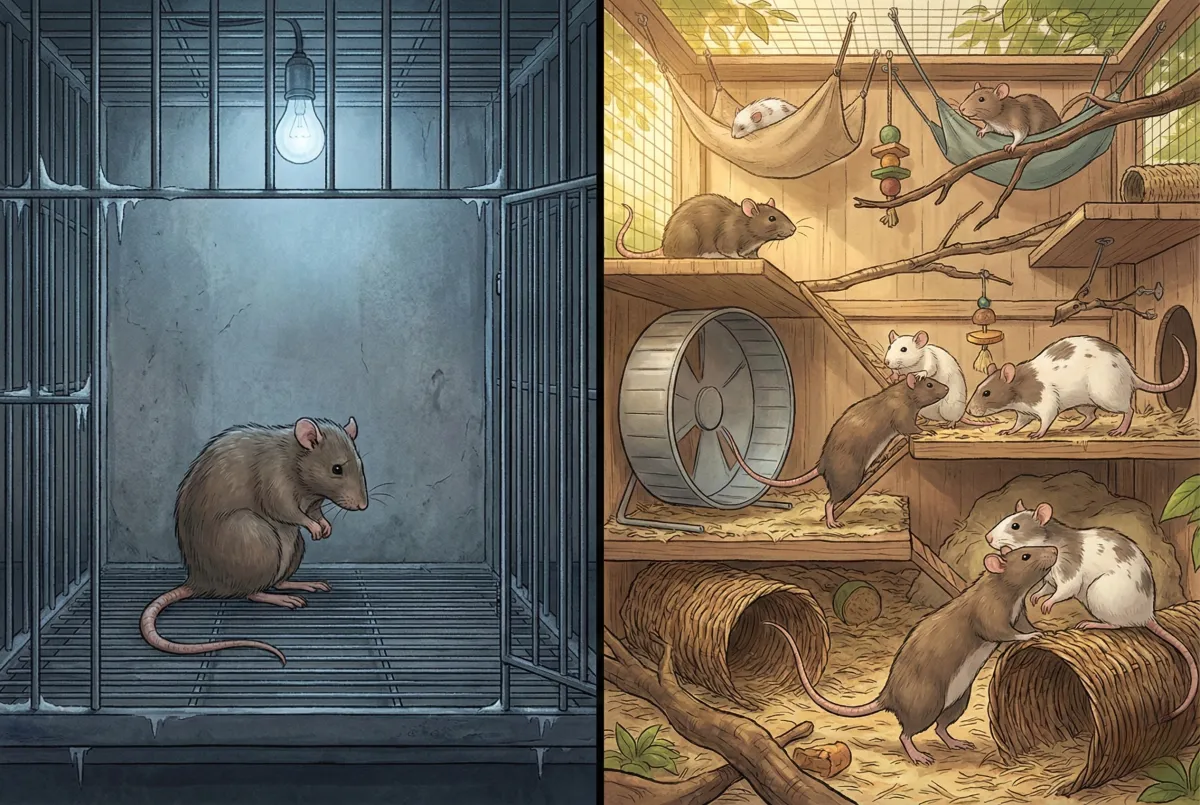
Picture two different worlds. In the first, you're isolated in a small, sterile room with nothing to do, no one to talk to, and no sense of purpose. Your only escape from the monotony comes from substances that temporarily numb the emptiness. In the second world, you're surrounded by friends, engaged in meaningful activities, and connected to a community that values you.
Which world do you think would lead to addiction?
This isn't just a thought experiment. It's the heart of one of the most important addiction studies ever conducted, and it completely changed how we understand why people turn to substances, behaviors, and other escapes when life becomes overwhelming.
The Experiment That Changed Everything
In the late 1970s, psychologist Bruce Alexander looked at addiction research and noticed something troubling. For decades, scientists had been putting rats in tiny, isolated cages with access to drugs like cocaine, heroin, and morphine. The rats consistently chose the drugs over food and water, often until they died.
The conclusion seemed obvious: drugs are inherently addictive. The substances themselves hijack the brain and create compulsive use.
But Alexander wondered: what if the problem wasn't the drugs? What if it was the cages?
So he created "Rat Park" – a spacious, enriched environment with platforms, wheels, tunnels, and most importantly, other rats. It was a rat paradise compared to the sterile isolation chambers used in previous studies.
The results were stunning. Rats in Rat Park rarely chose the drug-laced water. Even when researchers tried to force addiction by giving them drugs for weeks, the rats in the enriched environment quickly weaned themselves off when given the choice.
The isolated rats, however, continued the pattern of compulsive drug use seen in earlier studies.
What This Means for Human Addiction
Alexander's findings led to his "Dislocation Theory" – the idea that addiction isn't primarily about the substance or even individual weakness. It's about disconnection.
When people lack meaningful relationships, purpose, belonging, and hope, they become vulnerable to anything that temporarily fills that void. Substances, shopping, social media, work, perfectionism – these become substitutes for the connection and meaning our souls desperately crave.
This doesn't mean personal responsibility disappears. But it reframes addiction as a symptom of deeper societal and relational problems rather than simply a moral failing or brain disease.
The Modern Cage
Look around at our current culture, and you'll see many parallels to those isolated rat cages:
Social Isolation: Despite being more "connected" than ever through technology, rates of loneliness and social isolation are at historic highs. Many people report having no close friends or meaningful community. Recent neuroscience research shows that social isolation actually changes brain structure and function, making people more vulnerable to addiction and mental health struggles.
Economic Pressure: Financial stress, job insecurity, and the pressure to constantly achieve can create a sense of being trapped with no escape except temporary relief.
Loss of Meaning: When work feels meaningless, relationships feel shallow, and life feels purposeless, people naturally seek something to fill the emptiness.
Competitive Culture: Constant comparison and competition can leave people feeling inadequate and disconnected from others.
Digital Overwhelm: The endless scroll of social media, news, and entertainment can become its own form of cage – providing stimulation but not genuine connection or purpose.
Building Your Own Rat Park
The good news is that understanding dislocation theory gives us a roadmap for both preventing and overcoming addictive patterns. Instead of focusing solely on the substance or behavior, we can focus on building connection and meaning.
Cultivate Genuine Relationships
Quality over Quantity: One or two deep, authentic relationships matter more than dozens of surface-level connections. Invest in people who know the real you and love you anyway.
Vulnerability Practice: Share your struggles, fears, and hopes with trusted people. Isolation thrives in secrecy, but connection grows through honest sharing.
Serve Others: Nothing combats self-focus and emptiness like genuinely caring for others. Find ways to contribute to something bigger than yourself. Recent studies confirm that people in addiction recovery who have stronger social connections show better treatment engagement and outcomes.
Create Meaning and Purpose
Identify Your Values: What matters most to you? How can you align your daily life with these deeper values?
Pursue Growth: Learn new skills, explore interests, and challenge yourself in healthy ways. Stagnation feeds the need for artificial stimulation.
Connect to Something Transcendent: Whether through faith, nature, art, or service, connecting to something beyond yourself provides perspective and purpose.
Build Healthy Rhythms
Prioritize Rest: Constant busyness can be its own form of cage. Create space for reflection, relaxation, and renewal.
Engage Your Body: Physical activity, time in nature, and creative expression help you feel alive and connected to yourself.
Limit Artificial Stimulation: Be intentional about screen time, social media, and other forms of digital consumption that can substitute for real engagement.
The Faith Connection
From a Christian perspective, Rat Park theory aligns beautifully with biblical truth. We were created for relationship – with God and with others. When those connections are broken or missing, we naturally seek substitutes.
The Bible consistently presents community, purpose, and relationship with God as essential for human flourishing. "It is not good for man to be alone" (Genesis 2:18) isn't just about marriage – it's about our fundamental need for connection.
Jesus didn't just heal people's individual problems. He invited them into community, gave them purpose, and connected them to the Father's love. He understood that lasting transformation happens in the context of relationship and meaning.
Hope for the Isolated
If you recognize yourself in the isolated rat cage – feeling disconnected, purposeless, or trapped in patterns that aren't serving you – there is hope. You don't have to stay in that cage.
Start small. Reach out to one person. Join one group. Volunteer for one cause. Take one step toward the life and community you were created for.
The path out of isolation isn't always easy, but it's always possible. And unlike the rats in the experiment, you have the power to choose your environment and build your own version of Rat Park. Research on "environmental enrichment" continues to show that creating meaningful, connected environments is one of the most powerful tools for addiction recovery.
Creating Rat Parks for Others
Once you understand dislocation theory, you can't unsee the cages around you. You'll notice the isolated teenager, the overwhelmed mom, the lonely elderly neighbor, the coworker who seems to be struggling.
You have the power to create mini Rat Parks for others:
Invite someone into genuine friendship
Create inclusive community spaces
Offer practical support during difficult seasons
Listen without judgment
Share your own struggles and victories
Sometimes the most powerful intervention isn't addressing the addictive behavior directly. It's simply helping someone feel less alone.
The Bigger Picture
Rat Park reminds us that individual healing often requires community transformation. We can't just tell people to "just say no" while leaving them in environments that breed disconnection and despair.
True healing happens when we address both personal choices and systemic issues – when we create cultures of connection, meaning, and hope rather than isolation, meaninglessness, and despair.
Your brain health, your family's wellbeing, and your community's flourishing are all connected. When you choose connection over isolation, meaning over emptiness, and hope over despair, you're not just changing your own life. You're helping build a world where fewer people need to escape into artificial substitutes for the real thing.
Feeling stuck in patterns that aren't serving you? Our Peaceful Mind Quiz can help you identify areas where you might need more connection and support, or schedule a free clarity call to explore how coaching can help you build the meaningful life and relationships you're craving.


