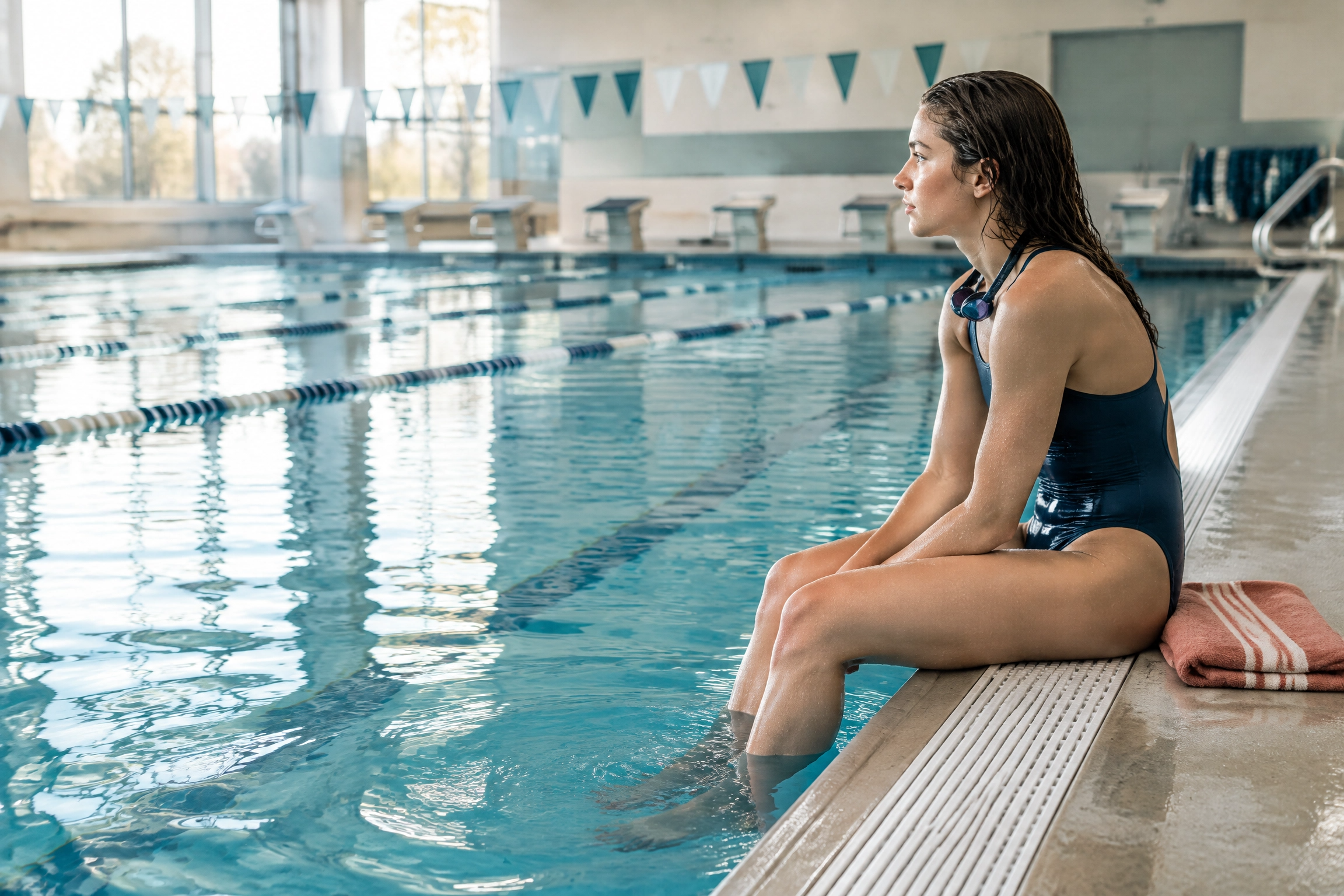
Your Swimmer Is Training More Than Their Stroke
Your swimmer is practicing how to respond under pressure. You can too.
By Dr. Yelena Gidenko | Neurocoach | Brain Health & Performance
When you drop your swimmer off at practice, you already know what they are working on.
Technique. Endurance. Turns. Starts. Pace. Stroke count. The ability to hold form through the final 50 of a hard set.
You follow times closely. You study splits. You make room in the family calendar for practices, meets, equipment, travel, and recovery.
But your swimmer is practicing more than a stroke.
Every hard set gives them opportunities to practice what to do when discomfort rises. Every missed interval gives them an opportunity to reset attention. Every disappointing race gives them an opportunity to recover, learn, and return. Every time they show up again after a hard day, they are practicing persistence.
The pool is not only a place where the body is trained. It is also a place where attention, coping, confidence, and stress responses are practiced.
And here is the part many swim moms rarely have space to consider: while their swimmer is being shaped by the demands of the sport, they are being shaped by their own repeated stress patterns too.
Key Takeaways
What swimmers practice in the pool | What parents can practice in real life |
|---|---|
Refocusing after a missed interval | Pausing before reacting to a stressful text or conversation |
Recovering after a disappointing race | Repairing after a sharp response or a difficult day |
Repeating skills with feedback | Building one small brain-health habit consistently |
Balancing effort with recovery | Protecting sleep, nourishment, connection, and margin |
Performing under pressure | Choosing the next helpful response when emotions are high |
What Is Actually Being Practiced in the Pool
A swimmer who is tired at the end of a demanding set is not simply proving toughness. They are managing a complicated task.
Maintaining technique while fatigued places real demands on attention, decision-making, motor control, and self-regulation. As swimmers repeat skills under different levels of fatigue and pressure, many components of movement can become more automatic. That can free attention for pacing, racing decisions, and responding to coaching cues.
Research on motor-skill learning under fatigue shows that fatigue can impair performance and the learning of new motor skills. The value of training comes from manageable challenge paired with skilled coaching, recovery, nutrition, and psychological safety.
Sport also gives athletes repeated chances to notice an emotion and decide what to do next. Research on emotion regulation and motor performance suggests that regulation strategies are associated with the perceptual, cognitive, and motor resources available for sport performance.
Your swimmer does not become resilient simply because stress is present. Growth happens through repeated challenge paired with support and recovery.
The Investment Gap Is Not a Character Flaw
Sports families invest deeply in an athlete’s development. They pay club fees. They coordinate travel. They make early-morning practices possible. They advocate, encourage, plan meals, pack bags, and spend long weekends on bleachers.
At the same time, many parents are living with depleted energy, poor sleep, a full mental load, and very little margin of their own.
That is not hypocrisy or a failure of faith. It is what can happen when someone carries a lot for a long time. A mom may be helping her swimmer manage nerves while her own stress about the meet, schedule, expense, or coach conversation is already high.
Nothing is wrong with her. She may not yet have had the support, tools, or repeated practice needed to build a different response.
The same principle that helps an athlete improve applies here: a pattern changes through small, repeated practices. Not by shaming yourself for having the pattern in the first place.
What Regulation Looks Like at a Swim Meet
Regulation does not mean you never feel nervous, disappointed, frustrated, or protective of your child. It means you notice what is happening inside you and choose your next response with care.
Imagine that your swimmer misses a best time by two-tenths of a second. You feel the disappointment rise in your chest. You had hoped for more. They had hoped for more.
In that moment, your swimmer is not primarily learning from what you may say on the ride home. They are learning from your first ten seconds.
They notice your face. Your tone. Whether you rush to explain the race. Whether you immediately search for someone to blame: the coach, the officials, yourself, or even your swimmer. Whether you make their result carry the weight of your emotions.
Or they notice you take one slow breath and say, “That was a hard one. I am proud of how you raced. Let’s get some water, and we can talk when you are ready.”
That is a regulation rep.
It is not perfection. It is practice.
Parent-child co-regulation research, much of it conducted with younger children, shows that responsive and flexible exchanges can support the development of self-regulation. Teen athletes are more independent than preschoolers, of course, and their developmental needs are different. Still, the practical principle holds: a parent’s calm, respectful presence can help create a more workable moment.
Your swimmer does not need you to be unbothered by every result. They need to see what it looks like to pause, be honest, repair after a hard moment, ask for help, and begin again.
Your Swimmer Learns From Repair, Not Perfection
You will not get every meet-day moment right. You may speak too sharply in the car or realize later that your stress entered the conversation.
That does not make you a bad sports parent. It gives you an opportunity to model repair.
A simple sentence can change the tone of a moment:
“I was stressed after that race, and I spoke too sharply. I am sorry. Your race does not need to carry my emotions. I love you, and we can talk later if you want to.”
That kind of repair does not erase the hard moment. It shows your swimmer that relationships can withstand one. It teaches accountability without shame.
Your goal is not to appear calm every moment. It is to model what healthy regulation and repair can look like in real life.
Growth Requires Recovery
Swimmers do not get stronger from effort alone. Training becomes adaptation when recovery is part of the process.
The same is true for parents.
In sport science, recovery is understood as more than physical rest. It includes physiological and psychological restoration, and it needs to be considered alongside training load rather than as an optional reward after everything is finished.
When you have been carrying sustained demands, your nervous system benefits from regular signals of safety, rest, and recovery. Sleep, consistent meals, movement, connection, prayer, time outdoors, slower breathing, and ten minutes when you are not managing everyone else all count.
You do not have to earn recovery by completing every task on the list. Recovery is part of the work. From a faith perspective, this is one way to understand stewardship. You are not a machine built to produce without limits.
How Swim Parents Can Stay Calm at Meets
Swim meets can bring early alarms, crowded decks, changing heat sheets, long waits, tight timelines, strong emotions, and pressure around times. Staying calm does not mean you do not care about your swimmer’s goals. It means you decide that their performance will not determine your ability to be present, supportive, and steady.
Before the meet, decide what you want your swimmer to feel from you: safety, encouragement, perspective, and belief. When stress rises, return to that intention before you respond.
Five Training Reps for Your Own Brain
You do not need an elaborate routine or an hour you do not have. Start with one small practice and repeat it often enough that it becomes familiar.
1. Name your default stress pattern.
Under pressure, do you overthink, withdraw, snap, over-explain, avoid, or try to control every detail? Name the pattern without judging it. You cannot practice a different response until you notice the current one.
2. Build a pause before a predictable trigger.
Choose one moment that reliably raises your stress level. It may be walking over after a race, opening an email from a coach, or getting in the car after a long practice. Before you respond, take one slow breath and relax your shoulders. You are creating space between the trigger and your next move.
3. Give the next conversation a purpose.
After a difficult race, decide in advance that your first job is to connect before you correct. Technical discussion, splits, and strategy can wait until your swimmer has eaten, settled, and is ready to talk.
4. Practice one grounding action when you start to spiral.
When analysis is no longer helping, move to one useful action. Drink water. Step outside. Take a short walk. Pray. Change rooms. Complete one small task. The point is not to avoid the issue. It is to help your body and attention settle before you decide what the issue requires.
5. End the day with a brief recovery check.
Ask yourself: “What did I carry today that I do not need to keep carrying tonight?” Then choose one recovery signal, even if it is small. Put the phone down for ten minutes. Take a shower. Make tomorrow’s coffee. Read a few verses. Breathe slowly before sleep.
These are training reps. Small enough to repeat. Practical enough to use on a real Tuesday or during a long meet weekend.
Frequently Asked Questions
Why do I keep overthinking?
Overthinking can be a learned coping pattern, often an attempt to create certainty or prevent disappointment. Notice the loop and redirect yourself to one useful action you can take now.
Why do I feel anxious even when I know what is true?
Anxiety often includes a strong physical stress response, which can make it harder to access what you know logically in the moment. Knowing what is true matters deeply. Under stress, you may also need repeated practices that help your body and attention respond to that truth, such as slow breathing, movement, prayer, grounding, and supportive connection.
How do I calm my mind in real time?
Lengthen your exhale, relax your jaw and shoulders, step outside, drink water, or walk for two minutes. Then choose one next action instead of trying to solve every part of the situation at once.
How do faith and brain science work together?
Faith offers meaning, truth, hope, and practices such as prayer, Scripture, community, and surrender. Brain science helps explain how repeated practices can shape attention, emotional habits, and stress responses over time. They do not need to compete. They can support one another.
Why do I feel stuck even when I am trying?
Change usually requires more than insight and willpower. It grows through small, repeated practices in the moments that matter. If you feel persistently overwhelmed or unable to function well in daily life, support from a licensed mental-health professional can be an important part of the process.
A note on support: The practices in this article are educational tools for everyday stress and emotional reactivity. They are not a replacement for individualized medical, psychological, or mental-health care.
Start With One Small Practice
Your swimmer is practicing how to focus, recover, respond, and return. You are being shaped by your repeated patterns too.
Not because you are failing. Because you are human. Small, repeated choices can help you protect more energy for what matters most.
You do not need another list of things you should do. You need simple, repeatable practices that help you choose a different response.
Start here: download Calm Your Nervous System Now, a free guide with practical, brain-based tools to help you interrupt overwhelm, quiet racing thoughts, and create more space for clarity and peace in your day.
If you are ready for more personalized support, you do not have to carry the emotional weight of your athlete’s sport alone. In a free Brain Health Clarity Call, we can talk about what feels most demanding right now and identify a practical next step.
You do not have to solve everything today. You only need to begin with one small practice.


