
Welcome to the Brain & Faith Blog
This is where neuroscience and Scripture meet to bring clarity, calm, and confidence into everyday life. From brain health tips and faith-based practices to practical support for parents of young athletes, you’ll find simple, actionable steps to strengthen your mind, nurture your spirit, and guide your family toward lasting peace and resilience.
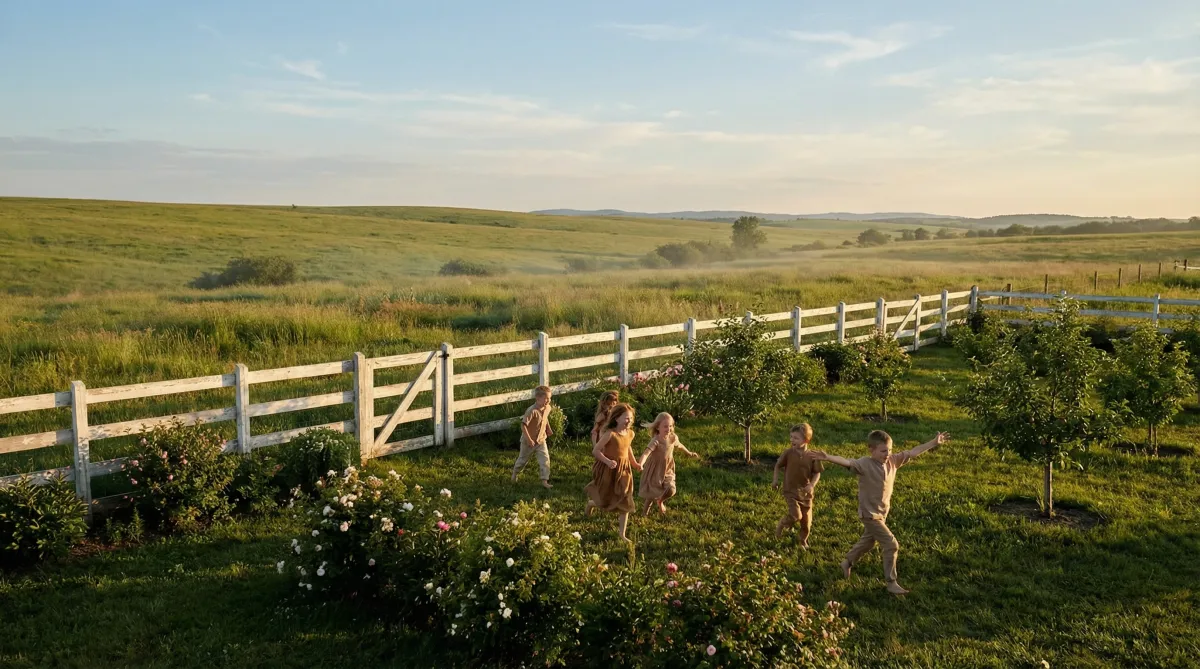
The Freedom of the Fence: Why Our Boundary-Less World is Making Us Anxious and Lost
A few years ago, a fascinating and now famous observation was made on a school playground. When a group of children were let out to play in a wide-open field with no fences, they didn’t scatter and explore. Instead, they huddled together in the middle, close to their teacher, anxious and unsure of their limits. But when the same children were taken to a playground enclosed by a simple fence, their behavior transformed. They ran, they explored, they used the entire space, playing with a confidence and freedom that was absent before. The fence, a clear and present boundary, didn’t restrict them. It liberated them.
This simple observation is a powerful parable for our modern world, and it’s one we have tragically ignored. We have become a society of fence-destroyers. In the name of freedom, autonomy, and a misguided sense of kindness, we have systematically dismantled the very structures that provide the psychological safety necessary for human flourishing. We have celebrated the removal of limits as the ultimate form of progress, yet we are more anxious, more depressed, and more lost than ever before. As a society, we need to ask a hard question: In our quest to tear down every fence, have we accidentally created a generation of children and adults huddled in the middle of the field, too scared to play? For people of faith, this trend is particularly alarming, as we see the wisdom of God’s design for protective limits being replaced by a cultural tide of limitlessness that even we are getting swept up in.
The Missing Fences in Our Homes
The erosion of boundaries begins at home. For the last few decades, a philosophy of permissive parenting has taken hold. It’s a well-intentioned approach, born from a desire to not repeat the authoritarian mistakes of the past. We want our children to feel heard, validated, and free to be themselves. But in practice, this has often translated into a fear of saying “no.” We’ve replaced firm, loving boundaries with endless negotiations, emotional appeals, and a reluctance to be the authority figure our children desperately need.
We think we are giving them freedom, but what their developing brains actually experience is chaos. A child’s brain is not a miniature adult brain; it thrives on predictability and structure. When there are no clear rules, no consistent consequences, and no firm “no,” the child’s nervous system is in a constant state of high alert. They don’t know what to expect, what is safe, or how to navigate their world. This doesn’t create confident explorers; it creates anxious children who are more likely to struggle with emotional regulation and decision-making later in life. Research consistently shows that a permissive parenting style is linked to higher rates of anxiety, depression, and poorer academic outcomes. The fence in the playground gives a child the psychological safety to explore. The loving and firm boundaries in a home do the exact same thing. They are the guardrails that say, “You are safe here. You can test, you can try, you can fail, and you will not fall off the cliff.” Without them, the world feels like a cliff edge in every direction.
The Missing Fences in Our Pockets
If the home is the first playground, the smartphone is the second, and it’s a playground with no fences, no teachers, and a few predators lurking in the bushes. In his groundbreaking book, The Anxious Generation, social psychologist Jonathan Haidt presents a mountain of evidence showing that the sharp rise in teen anxiety, depression, and self-harm directly coincides with the rise of the smartphone-based childhood.
Before the 2010s, childhood was phone-free. Social life was embodied, and interactions had natural boundaries of time and space. You couldn’t be bullied at 2 a.m. in your own bed. Social comparison was limited to the kids in your school, not millions of curated influencers online. We handed our children a device that gives them permanent, 24/7 access to a social world they are not developmentally equipped to handle. We removed every boundary that once protected them. We took away the fence and are now shocked that they are huddled, anxious, and comparing themselves to sickness.
This isn’t a failure of our kids; it’s a failure of our judgment. We gave them a world without limits, and it is overwhelming their nervous systems. The constant pings, the social pressure, the curated perfection it’s a recipe for mental health disaster. The solution, as Haidt and many others now argue, is to rebuild the fences. No smartphones before high school. No social media before 16. Phone-free schools. These aren’t suggestions of restriction; they are acts of protection. They are the digital fences our children need to feel safe enough to grow up healthy. The argument that “they need to learn to handle it” is a dangerous fallacy. We don’t teach a toddler to swim by throwing them in the deep end. We start in the shallow water, with floaties and a watchful eye. We build the boundaries of the pool first. To give a child a smartphone is to throw them into the ocean and hope they figure it out.
The Missing Fences in Our Society
The problem extends beyond our homes and our phones. As a culture, we have systematically dismantled the moral, ethical, and spiritual fences that once provided a shared sense of identity and purpose. The removal of prayer from schools wasn’t just a legal decision; it was a cultural statement that a shared moral framework, grounded in faith, was no longer welcome in the public square. While a direct causal link is complex, studies have shown that religious education and personal prayer can be significant protective factors for adolescent mental health, associated with better behavior and higher academic achievement.
When we removed that boundary, we didn’t create neutrality; we created a vacuum. A society that stands for nothing will fall for anything. We’ve replaced the clear moral fenceposts of biblical truth with the shifting sands of moral relativism, where every individual’s “truth” is equally valid. This creates a profound sense of instability. If there are no shared truths, no right and wrong, then there is no solid ground to stand on. Proverbs 29:18 tells us, “Where there is no vision, the people perish.” A vision, by its very nature, is a boundary. It defines what we are moving toward and, just as importantly, what we are leaving behind. It gives us a “why” for our “no.” Without a shared vision, a society is just a collection of individuals pursuing their own self-interest, a recipe for chaos and decay.
God, in His wisdom, is the original boundary-setter. The Ten Commandments were not a list of arbitrary rules to restrict fun; they were a fence built around His people to protect them from chaos and lead them into flourishing. They were a gift. When we, as a society, decide we know better than God and tear down the fences He established for our own good, we shouldn’t be surprised when we find ourselves lost and afraid in the middle of a dangerous, open field.
How to Start Rebuilding Your Fences: A Practical Guide
Understanding the problem is one thing; actively solving it is another. This isn’t a call to return to a bygone era or to build walls of isolation. It’s a call to wisely and lovingly re-introduce the structures that foster security and growth. Here are a few practical places to start.
1. Fortify Your Personal Fences
Before you can set boundaries for others, you must define your own. This is the foundational work.
Define Your “Yes” and “No.” Your time and energy are finite resources. Get clear on your priorities. What is a “heck yes” for you? What is a clear “no”? Write them down. When a new request comes in, check it against your list. This moves you from reactive decision-making to proactive, value-aligned choices.
Schedule Your Sabbath. In our 24/7 culture, rest is a radical act of faith. God modeled rest for us on the seventh day. Schedule a true Sabbath into your week a day or even a few hours of no work, no striving, and no screens. Protect it fiercely. This is a boundary against the world’s demand for constant productivity.
Practice the Graceful “No.” You don’t need a long-winded excuse. A simple, “Thank you for thinking of me, but I can’t commit to that right now” is a complete sentence. It is both kind and clear.
2. Rebuild the Fences in Your Home
Your home should be a sanctuary of safety and connection, and that requires clear, loving boundaries, especially around technology.
Create a Family Tech Plan. Don’t let technology use be a free-for-all. Sit down as a family and create clear rules. For example: No phones at the dinner table. All devices are docked in a central location (like the kitchen) at 9 p.m. No social media until 16. Write it down and post it where everyone can see it.
Embrace Your God-Given Authority. Your children need you to be the parent. This doesn’t mean being a dictator, but it does mean setting firm, consistent rules and consequences with love. When you say “no” to another hour of video games, you are saying “yes” to their brain health, their sleep, and their connection with the family.
Teach the “Why.” Don’t just set rules; explain the loving reason behind them. “We have a no-phones-at-dinner rule because our conversation with each other is the most important thing happening in this house.” This connects the boundary to a positive value.
3. Establish a Spiritual Fence
In a world of shifting truths, your family needs an anchor. A biblical worldview is the strongest fence you can build.
Make Faith a Daily Conversation. Weave scripture and prayer into the fabric of your daily life, not just a Sunday morning activity. When your child is anxious, pray with them. When they see something confusing on the news, open the Bible and talk about what God says about it.
Model Discernment. Talk openly about the messages the world is sending. Ask questions like, “What is this movie/song/show telling us is true? How does that compare to what God’s word says is true?” This teaches your children to be critical thinkers who can identify and resist ungodly cultural narratives.
Rebuilding these fences will be uncomfortable at first. The world will tell you that you are being restrictive and old-fashioned. But when you see your children playing with the freedom and confidence that comes from knowing they are safe, you will know you are doing the right thing. You are giving them the gift of a world that makes sense, a world where they can play and explore and become who God created them to be not because they are without limits, but because they are safe within them.

Brain Health Matters, LLC
Helping busy minds find peace through faith and neuroscience.


© 2025 Brain Health Matters, LLC. All rights reserved.
Terms & Conditions