
Welcome to the Brain & Faith Blog
This is where neuroscience and Scripture meet to bring clarity, calm, and confidence into everyday life. From brain health tips and faith-based practices to practical support for parents of young athletes, you’ll find simple, actionable steps to strengthen your mind, nurture your spirit, and guide your family toward lasting peace and resilience.
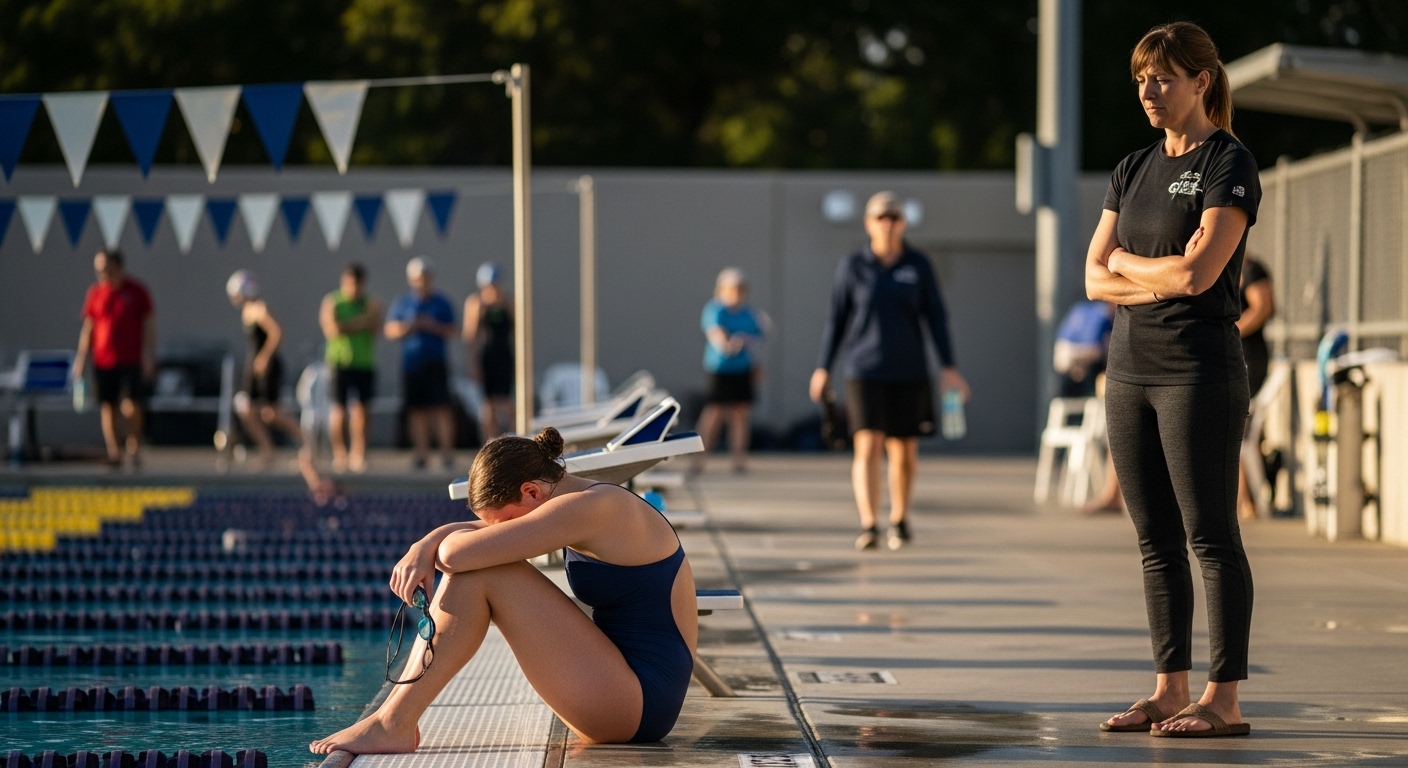
The Hardest Lesson in Sports Parenting: Letting Your Teen Learn From Failure
When Every Instinct Screams "Fix It"
You're in the stands. Your heart is pounding. And then it happens.
Your child makes a critical mistake. Maybe they false-start at a crucial moment. Maybe they panic mid-race and lose their composure. Maybe they freeze under pressure when you know they have the skills to succeed. In that instant, every fiber of your being wants to rush down there, wrap them in your arms, and somehow make it all better.
This is the paradox of sports parenting: the very instinct that makes you a good parent (the drive to protect your child from pain) can actually prevent them from developing the resilience they need to thrive. When you watch your teen athlete struggle, fail, or fall apart emotionally, your brain interprets their distress as a threat. Your amygdala (the brain's alarm system) activates, flooding your body with stress hormones that create an overwhelming urge to intervene and eliminate their discomfort.
But here's what I've learned through years of working with athletes and their families, what neuroscience confirms, and what I've experienced firsthand as a swim parent myself: the moments when your child navigates their own setbacks, processes their own emotions, and finds their own path forward are the moments that literally rewire their brain for resilience. When you resist the urge to fix, you're not being cold or uncaring. You're giving them something far more valuable than a quick rescue. You're giving them the opportunity to discover their own strength.
What Happens in Your Teen's Brain During Failure
Understanding the neuroscience of failure can help you respond more effectively when your athlete is struggling. When your teen experiences a setback (whether it's a disappointing performance, a mistake that costs their team, or a moment of panic that derails their race), their brain goes into high alert.
The amygdala triggers a stress response, releasing cortisol and adrenaline. In the immediate aftermath, their prefrontal cortex (the brain region responsible for rational thinking, emotional regulation, and problem-solving) goes temporarily offline. This is why your child might seem irrational, overly emotional, or unable to think clearly right after a difficult moment. Their brain is literally in survival mode.
Here's the critical part: how they move through this stress response determines whether their brain learns resilience or reinforcement of fear. If you immediately swoop in to fix the problem, soothe every uncomfortable feeling, or remove every obstacle, you're inadvertently teaching their brain that they can't handle difficult emotions on their own. The neural pathways that develop are ones of dependence and avoidance.
But when you hold space for their emotions without trying to eliminate them, when you trust them to work through the discomfort with your support rather than your solutions, their brain learns something entirely different. The prefrontal cortex comes back online. They practice emotional regulation. They develop distress tolerance (the ability to experience uncomfortable emotions without being overwhelmed by them). Research shows that adolescence is a time of increased brain plasticity, which means these experiences literally shape how their brain will respond to challenges throughout their life. These are the neural pathways that build resilience, confidence, and genuine mental toughness.
The Shift from Fixer to Facilitator
Making the shift from "fixer" to "facilitator" is one of the most challenging transitions in parenting, especially when it comes to your teen athlete. It requires you to manage your own emotional response while your child is in distress. But this shift is essential for their development.
Hold Space Without Fixing
When your teen is upset after a disappointing performance, the most powerful thing you can do is simply be present. This doesn't mean being passive or indifferent. It means creating a safe emotional container where they can experience their feelings without judgment or pressure to "get over it" quickly.
Instead of immediately jumping to "It's okay, it's just one race" or "Don't worry, you'll do better next time," try something like: "That was really hard. I'm here." This simple acknowledgment validates their experience without minimizing it or rushing them through it. You're teaching them that difficult emotions are manageable and temporary, not catastrophic states that require immediate rescue.
Your teen's brain is learning a crucial lesson in these moments: I can feel terrible and survive it. My parent believes I can handle this. This belief becomes the foundation of genuine confidence (not the false confidence that comes from constant reassurance, but the deep-rooted trust in their own capacity to navigate challenges).
Listen More Than You Talk
The car ride home from a competition can feel like a minefield. You want to help. You want to offer perspective. You want to make them feel better. But often, the most helpful thing you can do is stay quiet and let them lead the conversation.
As a swim parent, I've learned this the hard way. Resist the urge to launch into a detailed analysis of what went wrong or what they should do differently next time. Instead, create space for them to process. If they want to talk, listen without immediately offering solutions. Ask open-ended questions that help them think through the experience: "What's going through your mind right now?" or "What was that like for you?"
Sometimes they won't want to talk at all, and that's okay too. Silence can be a gift (a chance for their nervous system to settle and their prefrontal cortex to come back fully online). Your presence and acceptance communicate more than any words could in these moments.
Guide Without Directing
Once the initial emotional intensity has passed (and this might be hours or even a day later), you can help your teen think through what happened and what they might want to do moving forward. The key is to guide their thinking rather than imposing your solutions.
You might ask questions like: "What do you think you learned from this experience?" or "If you could go back, what would you do differently?" or "What's one thing you want to work on before the next meet?" These questions engage their prefrontal cortex and help them develop problem-solving skills and self-awareness.
When they come up with their own insights and solutions, they're far more likely to internalize the learning and take ownership of their growth. They're also building the neural pathways for self-directed improvement (a skill that will serve them far beyond their athletic career). Studies show that athletes with high self-efficacy are more likely to set challenging goals, persist in the face of setbacks, and perform better under pressure, and this self-efficacy develops when young athletes learn to navigate challenges independently.
Celebrate the Comeback, Not Just the Victory
Pay attention to what you praise and celebrate. If you only express pride and excitement when they win or perform well, you're reinforcing the message that their worth is tied to their results. But when you celebrate their courage to get back in the pool after a difficult race, their willingness to try again after a mistake, or their emotional growth in handling disappointment, you're teaching them that resilience is more valuable than perfection.
After a tough competition where your teen manages to regroup and compete again, acknowledge that specifically: "I'm so proud of how you handled yourself today. Getting back up after a hard moment takes real strength." This kind of recognition builds the identity of someone who can handle adversity, which becomes a self-fulfilling prophecy.
Why This Is Especially Critical for Teen Athletes
Adolescence is a unique developmental window where your child's brain is undergoing massive reorganization. The teenage years are when the prefrontal cortex is developing the executive functions that will serve them throughout adulthood (planning, emotional regulation, impulse control, and independent decision-making).
During this period, teens are also working on the fundamental developmental task of establishing their own identity separate from their parents. They need opportunities to test themselves, make their own decisions, experience consequences, and develop confidence in their own judgment. When you constantly intervene to prevent failure or fix problems, you're interfering with this critical developmental process.
Teen athletes who are given appropriate autonomy to navigate their own challenges develop what psychologists call self-efficacy (the belief in their own ability to handle difficult situations). This self-efficacy becomes the foundation for everything from academic persistence to career resilience to healthy relationships. The pool, the field, the court: these become training grounds not just for athletic skills, but for life skills.
Conversely, teens who are over-protected from failure often develop anxiety, perfectionism, and a fragile sense of self that depends on external validation. They may achieve at high levels while their parents are managing everything, but they struggle when they reach college or adulthood and suddenly have to navigate challenges independently.
The Long-Term Payoff: Building a Resilient Adult
When you step back and allow your teen athlete to handle their own setbacks, you're investing in their long-term wellbeing in ways that extend far beyond sports. The resilience they develop through navigating athletic challenges becomes the template for how they approach every obstacle in life.
They learn that failure is not a reflection of their worth, but information they can use to improve. They discover that uncomfortable emotions are temporary and manageable. They develop confidence in their own problem-solving abilities. They build the mental toughness to persist through challenges rather than giving up when things get hard.
These are the qualities that will help them navigate academic pressures, career setbacks, relationship challenges, and all the inevitable difficulties of adult life. The teen who learns to get back in the pool after a panic attack, who processes their disappointment and then chooses to compete again, who talks to their coach about what went wrong and develops a plan to improve: that teen is building neural pathways for resilience that will serve them for decades to come.
Your Role: The Steady Presence
Your job as the parent of a teen athlete is not to prevent all pain or fix all problems. Your job is to be the steady, supportive presence that communicates an unwavering message: I believe in your ability to handle this. I'm here if you need me, but I trust you to navigate this challenge.
This doesn't mean you're distant or uninvolved. It means you're involved in a different way (not as the rescuer, but as the secure base from which they can venture out, take risks, experience setbacks, and return to regroup). You're the safe harbor, not the rescue boat.
When you watch your child struggle and resist the urge to fix it, you're doing some of the hardest and most important work of parenting. You're teaching them that they are capable, that they are resilient, and that they have what it takes to handle life's challenges. And that lesson is worth more than any medal they could ever win.
I know this from experience. Watching from the stands as my own swimmer navigates the highs and lows of competition has taught me that my role isn't to shield her from every disappointment or solve every problem. It's to be the consistent, loving presence that believes in her ability to find her own way through. And when I get it right (which isn't always), I see her grow stronger, more confident, and more resilient with each challenge she faces.
If you're navigating the challenges of parenting a teen athlete and want support in building resilience, emotional regulation, and mental toughness (both for your child and yourself), I'd love to help. My coaching combines neuroscience, faith-based practices, and practical strategies specifically designed for families in the youth sports world. Learn more about working together here.

Brain Health Matters, LLC
Helping busy minds find peace through faith and neuroscience.


© 2025 Brain Health Matters, LLC. All rights reserved.
Terms & Conditions