Help Your People Perform
When Pressure Is High
Practical brain-based training that helps your people think clearly, respond well, and perform closer to their capabilities when demands rise.
THE GAP NOBODY TALKS ABOUT
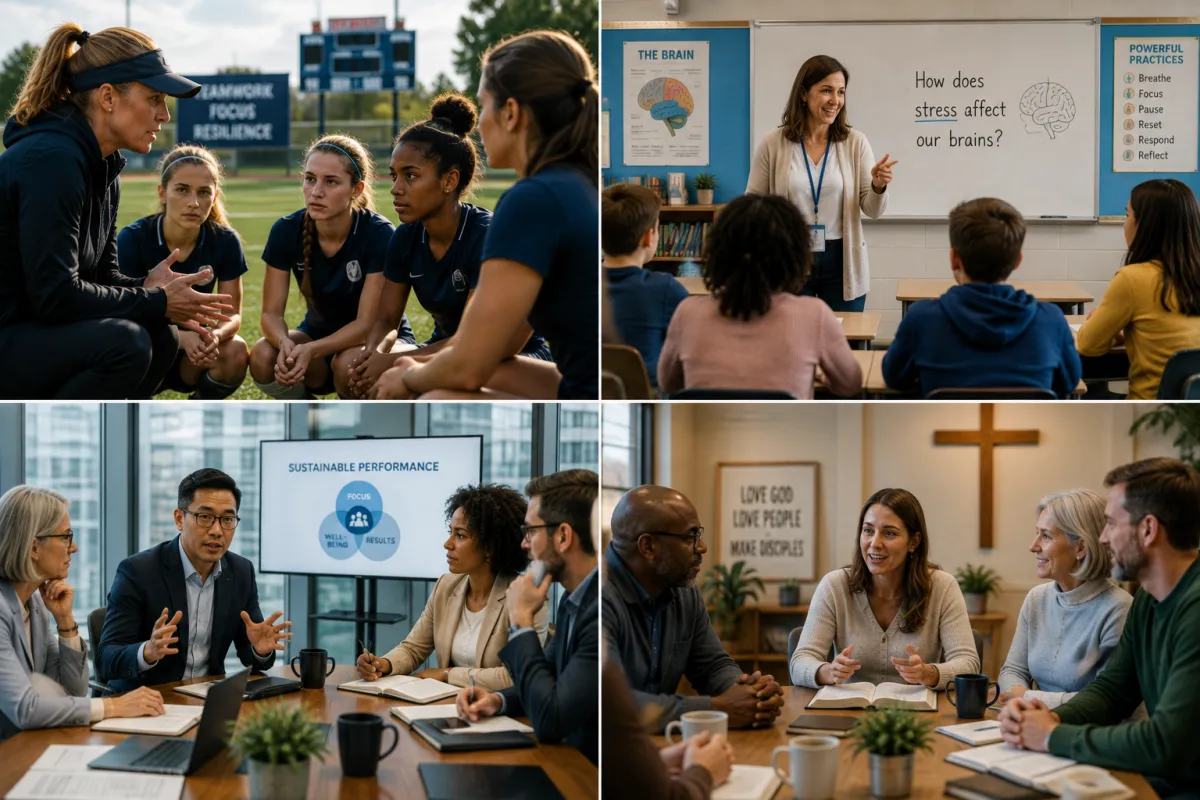
Your athletes know how to execute when they're calm. But under pressure in competition, everything changes.
Your employees understand focus and good decision-making. But when stress spikes, they react instead of think.
Your students understand the material. But test anxiety, social pressure, or overwhelm can make it harder to access what they know.
Your staff and volunteers understand what good ministry looks like. But exhaustion and pressure change how they show up.
Organizations invest heavily in teaching skills, systems, and performance. What often gets missed is this: people function differently when their brains are under pressure.
The gap between what people know how to do when they're calm and what they can actually access when demands are high is where performance breaks down.
Brain health training helps close that gap.
WHAT CHANGES WHEN PEOPLE UNDERSTAND THEIR BRAINS
✓ One Mistake Doesn't Become a Bad Game
Athletes and employees reset after setbacks and move forward instead of carrying them.
⚡ One Stressful Interaction Doesn't Wreck the Workday
Recognize the stress response and reset before it cascades into the rest of the day.
🧠 Struggling Isn't Always a Motivation Problem
Leaders recognize pressure's impact and respond with support instead of pushing harder.
🌱 An Exhausted Volunteer Isn't Simply Told to Push Through
Sustainable recovery and management of demands become possible.
🎯 Teams Speak the Same Language About Pressure
Practical tools replace vague advice like "just focus" or "calm down."
HOW THIS WORKS ACROSS YOUR ORGANIZATION
⚽ Athletic Programs & Coaches
Help your athletes and coaches understand how pressure affects performance and develop practical mental skills for focus, recovery, resilience, and consistency.
📚 Schools & Educators
Help educators understand how stress, attention, emotional regulation, and adolescent brain development affect learning and behavior. Support both students and staff.
✝️ Churches & Faith Communities
Support ministry leaders, staff, volunteers, parents, and youth with practical education around stress, resilience, brain health, and sustainable service.
🏢 Corporate Teams & Leadership
Help teams understand how pressure affects attention, decision-making, and communication. Develop practical tools for thinking and responding more clearly.
WHY BRAIN HEALTH MATTERS TO ME
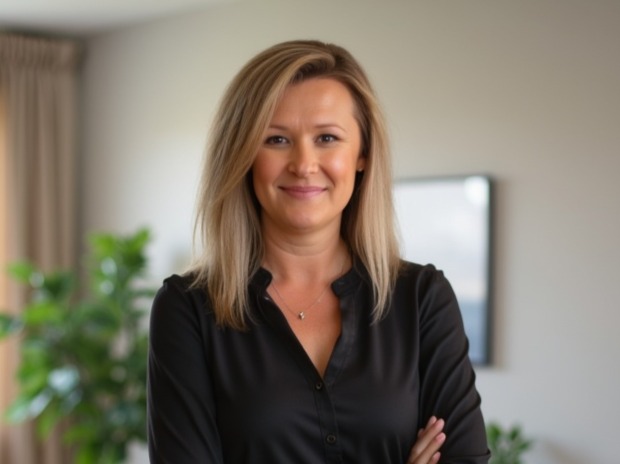
Dr. Yelena Gidenko, PhD
Psychology Professor | Licensed Clinical Mental Health Counselor Supervisor | Brain Health Educator | Neurocoach
20+ Years in Psychology, Education & Mental Health
For more than 20 years, my work has centered on psychology, human behavior, stress, learning, and what helps people function well when demands are high.
As a psychology professor, licensed clinical mental health counselor supervisor, neurocoach, brain health educator, and parent of a competitive athlete, I've seen the same principle across very different areas of my work and life: the gap between what people can do when calm and what they can access under pressure.
That gap affects more than mental health. It shapes how we think, communicate, learn, lead, make decisions, recover from mistakes, and perform.
My work translates neuroscience and psychology into practical tools people can understand and use in the environments where pressure actually happens.
No complicated neuroscience lecture. No motivational hype. Just practical education that helps people understand their brains and gives them something useful to do with that knowledge when it matters most.
WAYS WE CAN WORK TOGETHER
🎤 Workshops & Presentations
Focused sessions on stress, resilience, brain health under pressure, communication, or performance tailored to your organization's specific needs.
👨🏫 Professional Development
Practical training for educators, coaches, leaders, staff, or professionals who want to understand how pressure and stress affect thinking, behavior, and performance.
👥 Team & Group Training
Interactive training for athletes, parents, employees, students, ministry teams, or other groups facing shared demands.
⚙️ Custom Training & Consulting
Have a specific challenge? Let's identify what your organization needs and develop training, resources, or a multi-session program around it.
Your Questions Answered
How is this different from standard training or team-building?
Most team-building focuses on cohesion. Leadership training focuses on management skills. This is about the gap between knowing what to do and being able to access it under pressure. I teach your people how their brains function when demands are high and give them practical ways to close that gap.
Can you customize this for our specific organization?
Yes. I start by understanding your specific challenges. An athletic program faces different pressures than a school or a corporate team or a church. Training is built around what you're actually dealing with, not a standard curriculum.
What's the typical timeline?
It depends on what your organization needs. A single workshop may be enough, while training across multiple groups or a customized program may take place over several weeks or months. I'll work with you to determine the scope and timeline before the work begins.
How do we know if this is working?
I'll identify what you want people to understand or do differently before the training begins. Depending on the engagement, that may include participant feedback, changes in confidence or understanding, practical application of the tools, or other measures relevant to your goals.
How does this work alongside other mental health support?
This work can complement counseling, EAP services, wellness initiatives, or other mental health supports already in place. It focuses specifically on education: helping people understand how pressure affects brain function and giving them practical tools they can use before, during, and after demanding situations.
Can faith be incorporated into the training?
Faith integration is available for churches, Christian schools, ministries, and other faith-based organizations. For secular organizations, training is grounded in psychology, neuroscience, and practical brain health education. I adapt the approach to fit your organization.
LET'S TALK ABOUT YOUR ORGANIZATION
You don't need to know exactly what type of training you need before reaching out. Tell me what you're seeing, who you want to support, and what you'd like to improve. We'll talk through whether a workshop, training, or customized approach makes sense.
Brain Health Matters, LLC
Brain health for real life under pressure.


© 2026 Brain Health Matters, LLC. All rights reserved.