
Brain Health Matters Blog
Practical neuroscience, brain health, performance, and faith for everyday life.
Explore simple tools for a calmer mind, healthier habits, stronger families, and greater resilience.
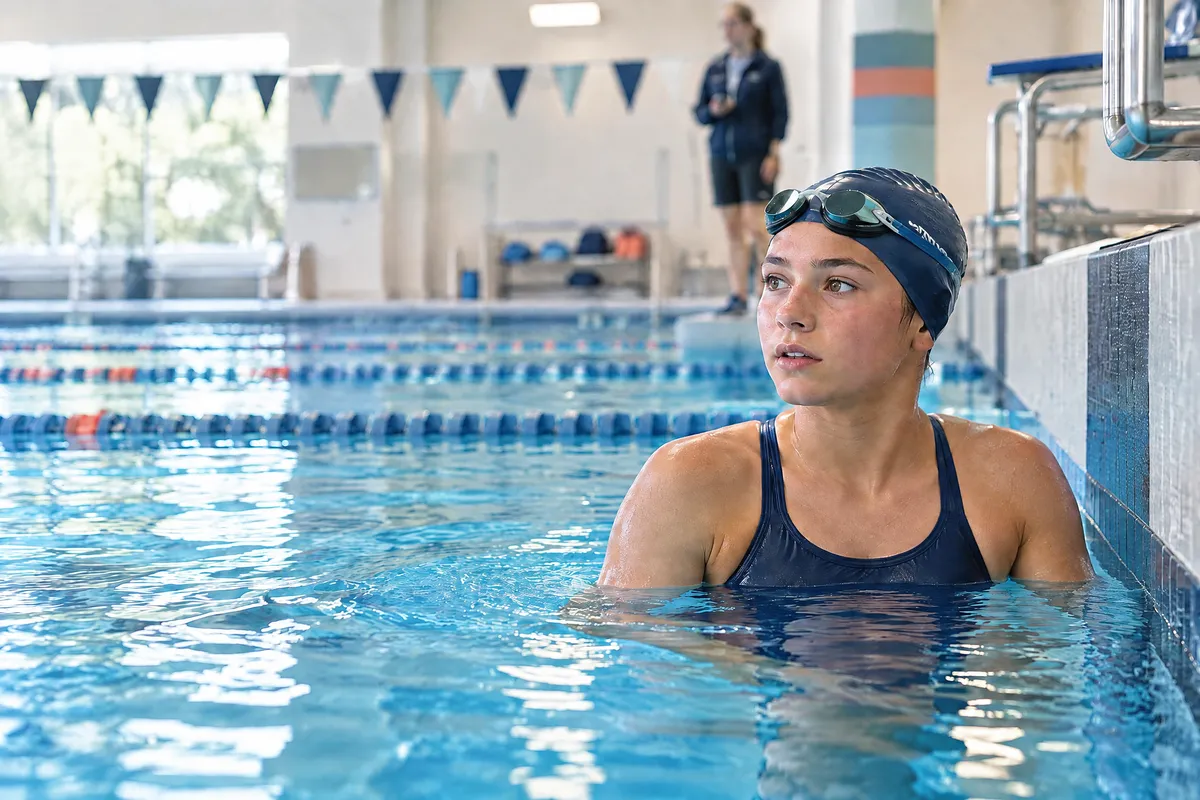
Why Mistakes Matter More Than Most Swimmers Think
What swimmers, coaches, and parents need to understand about hard practice, useful feedback, and learning at the edge of current ability.
By Dr. Yelena Gidenko, PhD | Neurocoach, Brain Health & Performance
A swimmer misses the interval again.
Maybe the coach changes the drill. Maybe the turn falls apart when the set gets hard. Maybe a swimmer tries a technical adjustment that feels awkward and suddenly looks slower than usual.
This is often the moment when the wrong conclusion gets made.
“I cannot do this.”
“I am getting worse.”
“This practice is a waste.”
Let’s slow this down. What is actually happening?
In many cases, the swimmer is no longer repeating a skill that already feels automatic. They are working at the edge of what they can do right now. That is where learning often becomes visible, and visible learning is rarely neat.
The goal of practice is not to prove what a swimmer can already do. It is to spend enough time at the edge of what they cannot do yet, use the feedback, and return more capable.
That does not mean mistakes are the goal. It does not mean every hard set is productive. It does not mean an athlete should push through pain, injury, illness, or complete exhaustion.
It means that a practice with no struggle may be rehearsal. Rehearsal has a place. But improvement asks for something more: a clear target, an honest attempt, useful feedback, and another attempt with one adjustment.
Key Takeaways
A mistake is not proof that a swimmer lacks ability. It can show where skill, pacing, attention, or recovery needs work.
Practice needs enough challenge to require adjustment, but not so much that the swimmer only repeats poor mechanics or shuts down.
Coaches help athletes learn when feedback is specific, usable, and tied to the next repetition.
Parents can support development by asking a better question after a hard practice.
The most useful response to a mistake is not self-criticism. It is one clear adjustment.
Practice Is Not a Test of Worth
Many swimmers walk into practice treating every set like a test.
If they hit every interval, they feel capable. If they miss one, their confidence drops. If a new drill feels clumsy, they assume they are bad at it. That pattern turns ordinary feedback into a personal verdict.
But a pool is not supposed to be a place where an athlete only displays finished skills. It is a place where skills are built.
Think about a swimmer learning to hold their stroke together during the last part of a difficult freestyle set. At an easy pace, they may know exactly what a strong catch feels like. Under fatigue, timing changes. The elbow drops. The breath gets rushed. The turn loses speed.
That does not automatically mean the swimmer has lost the skill. It may show that the skill is not stable yet under that specific demand.
That distinction matters.
A swimmer does not need to ask, “Why am I failing?”
They need to ask, “What changed when this got hard?”
Was the tempo too quick? Did breathing change? Did the swimmer stop holding water? Did they misjudge the first 100? Did they need more recovery before the next quality effort?
A mistake becomes useful when it leads to better information. It becomes harmful when the athlete turns it into an identity statement.
“You missed the wall” is information.
“You are terrible at turns” is a label.
One helps the next rep. The other makes the next rep heavier than it needs to be.
What the Brain Is Doing When a Skill Breaks Down
Motor learning is not just about doing more repetitions. The quality of the repetition matters.
The brain and body are constantly taking in information: what the swimmer expected to happen, what actually happened, what they felt in the water, what the clock showed, and what the coach observed. A difference between the intended movement and the result gives the athlete something to adjust.
This is why feedback matters. Research on practice and skill acquisition points to practice quality, the level of challenge, and the fit between instruction and the individual athlete. The deliberate-practice literature also describes learning conditions that include a clear goal, repeated attempts, and feedback the learner can act on.
That is not the same as saying every error creates growth.
A swimmer can repeat the same mistake for weeks and not improve if no one helps them see what needs to change. They can also receive so many corrections at once that they cannot use any of them. The brain does not need a lecture in the middle of a set. It needs one cue it can apply before the next repeat.
In swimming, feedback can be especially helpful because the athlete cannot easily see their own movement in the water. In one study of national-level swimmers, both coach feedback and real-time timing feedback affected pace control compared with no feedback during 200-meter efforts. That does not tell us that one form of feedback works best for every swimmer or every skill. It does show why specific feedback during swim training is more useful than simply telling an athlete to work harder.
The point is simple: struggle by itself is not the teacher. Struggle plus clear information and another attempt is where learning can happen.
The Right Kind of Hard
Not every difficult practice creates the same result.
A swimmer needs enough challenge to require attention and adaptation. But when the task is far beyond current ability, the athlete may lose the movement pattern, lose the point of the set, or begin to protect themselves by disengaging.
This is the basic idea behind the challenge point framework: the most useful amount of difficulty depends on the task and the learner. What stretches one swimmer may overwhelm another. What challenges a 10-year-old learning a legal breaststroke pullout is different from what challenges a high-school swimmer trying to pace a 500.
Coaches already see this every day.
A set that is too easy asks very little of the athlete. A set that is too hard can make every rep look the same, regardless of effort. The productive middle is where the swimmer must pay attention, make a choice, and learn what happens when they change something.
That is why well-designed training includes both repetition and challenge.
A swimmer needs repetitions that reinforce good movement.
They also need sets that reveal whether that movement holds when the pace changes, the rest gets shorter, the race plan shifts, or the last 50 hurts.
Neither type of work is enough by itself.
What Swimmers Need to Hear
Swimmers need to stop using discomfort as evidence that they are incapable.
A new start, turn, stroke change, pace, or race strategy often feels worse before it feels natural. That is normal. The old pattern is familiar. The new pattern requires more attention.
But normal does not mean ignore everything and keep forcing it.
A swimmer should speak up about pain, dizziness, illness, unusual fatigue, or fear that does not settle with support. Good training respects the body. It does not glorify suffering.
For the ordinary frustration of learning, though, the next question is smaller:
What is one thing I can change on the next rep?
Not five things. Not a replay of every bad detail. One thing.
“Hold my line into the wall.”
“Keep my head still on the breath.”
“Build the first 100 instead of chasing the first split.”
“Finish the kick through the wall.”
That kind of question moves the brain from global self-judgment to a specific action. It gives the swimmer something they can do now.
What Coaches Need to Build
Coaches set the meaning of mistakes long before a championship meet.
Athletes learn quickly what brings attention. If every mistake brings a public reaction, a vague correction, or visible disappointment, some swimmers will begin trying to avoid mistakes more than they try to learn. They may play safe. They may hide confusion. They may stop taking the technical risks that progress requires.
A strong coach does not lower the standard. A strong coach makes the standard usable.
That usually sounds specific.
Instead of “Fix your turn,” try: “On this next one, get your last stroke into the flags and carry speed into the wall.”
Instead of “You are dying at the end,” try: “Your stroke rate fell on the last 25. Pick one cue to keep your tempo connected.”
Instead of correcting every part of the race, identify the one variable that will most likely help the next attempt.
Coaches also need to protect the difference between challenge and overload. A swimmer who is repeatedly breaking down may need a different entry point, a clearer goal, more recovery, or a skill progression before adding more pressure. More volume is not always more learning.
The athlete should leave a correction knowing what to do, not simply knowing what was wrong.
That is how you create a culture where swimmers can be accountable without becoming afraid of the learning process.
What Parents Need to Stop Reinforcing
Parents rarely mean to make mistakes bigger. But it can happen in the car after practice or after a race.
“What happened?”
“Why did you do that?”
“Your coach must be frustrated.”
Those questions may come from concern. But a swimmer who is already replaying the race may hear them as more evidence that the moment was a disaster.
You do not need to pretend the race went well. You also do not need to conduct a post-race analysis before the swimmer has eaten, cooled down, or had a chance to settle.
Start smaller.
Try this: “What did you notice when it got hard?”
That question does three things. It tells the swimmer you are paying attention. It makes room for an honest answer. And it directs the conversation toward observation instead of judgment.
If they do not want to talk, let that be enough for the moment. Parents are not responsible for coaching every race. Your job is to help your swimmer stay connected to the process when the result did not go their way.
Later, when they are ready, ask: “What is one thing you want to take into your next practice?”
That is a better use of the car ride home than trying to solve the whole season.
Use the One-Variable Reset
At the next hard practice, missed interval, or disappointing race, use one response across the team and at home.
Name the fact. Choose one variable. Take the next rep.
Here is what that looks like:
Name the fact: “I added two strokes into the wall on the last 50.”
Choose one variable: “I will keep my tempo through the flags.”
Take the next rep: Put attention on that one cue and let the next effort give you more information.
This is not positive thinking. It is a way to keep a mistake in its proper place.
The mistake is data. The next response is training.
For swimmers, this protects attention.
For coaches, this creates actionable feedback.
For parents, this keeps one hard moment from becoming a story about who the athlete is.
A Quiet Truth About Falling Short
There is a verse that names this pattern plainly: “Though the righteous fall seven times, they rise again” (Proverbs 24:16).
That is not a command to act like falling does not matter. It is a correction to the belief that falling gets the final word.
Athletes will have races that do not go as planned. They will miss goals. They will feel frustrated by a skill that used to feel easy. The response is not denial. It is truth, adjustment, and another faithful attempt.
The same is true beyond the pool.
You do not build a steady life by waiting until every step feels comfortable. You build it by learning to notice what is true, make the next adjustment, and stay engaged when the work exposes a gap.
Peace is built through consistent practice, not intensity.
Sometimes the need for recovery shows up before an athlete recognizes it. If you are wondering whether your swimmer may need more recovery than they are getting, download The Quiet Signals That Deserve a Second Look: 10 Surprising Brain-Based Clues Your Teen Athlete Might Need More Recovery Time. It can help you recognize some of the less obvious signs that their brain and body may be asking for more recovery.
Mistakes are not the goal. They are often the evidence that an athlete is doing the work of becoming more capable.

Brain Health Matters, LLC
Brain health for real life under pressure.


© 2026 Brain Health Matters, LLC. All rights reserved.