
Brain Health Matters Blog
Practical neuroscience, brain health, performance, and faith for everyday life.
Explore simple tools for a calmer mind, healthier habits, stronger families, and greater resilience.
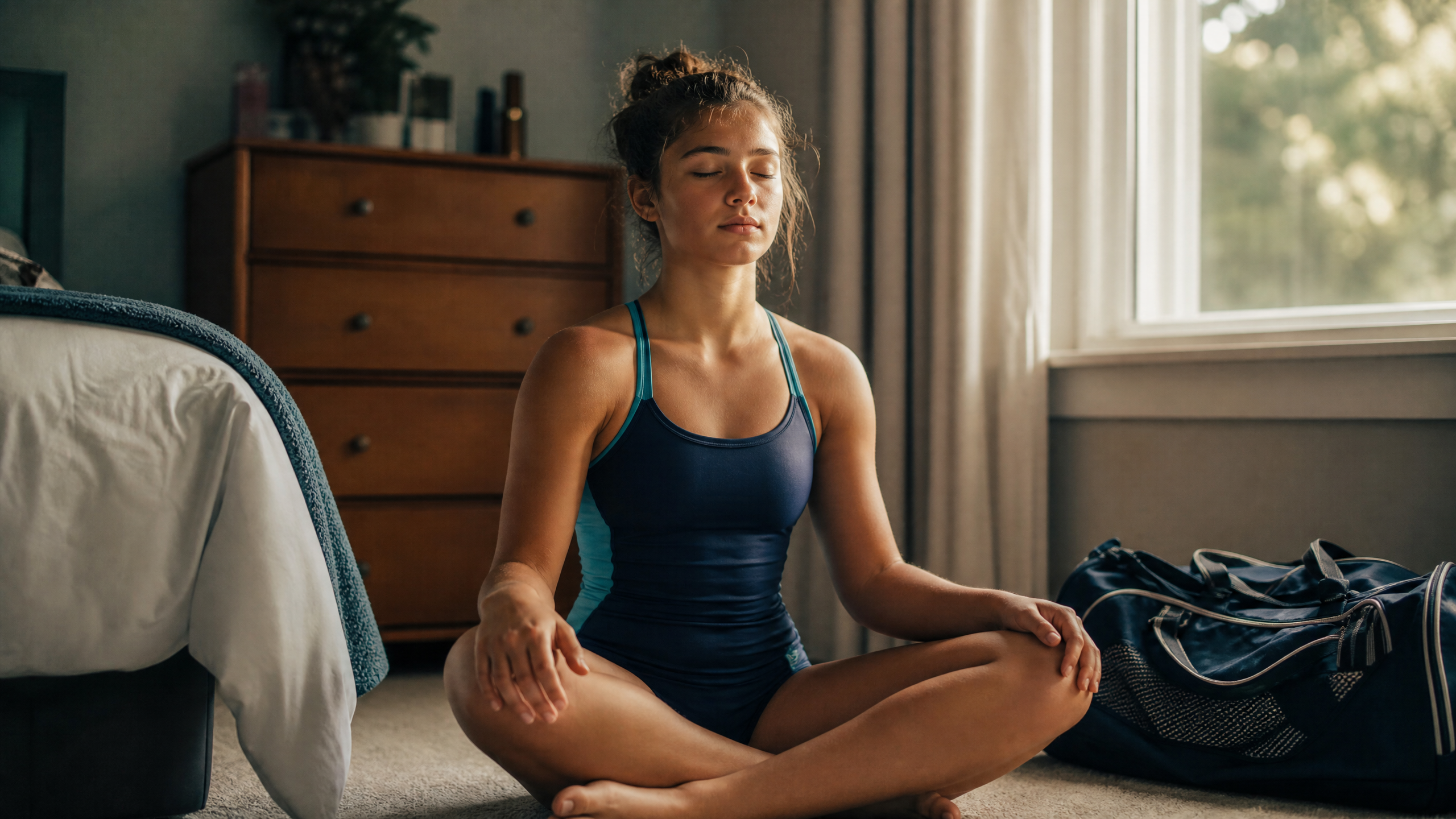
Your Athlete’s Brain Is Already in the Race. Are They Training It?
Mental skills deserve practice just like physical skills. Here is how your competitive athlete can start this week.
By Dr. Yelena Gidenko | Neurocoach | Brain Health & Performance
Athletes do not begin performing when the starting gun fires or the whistle blows. Their brains have already been preparing, predicting, interpreting pressure signals, and directing attention. The race begins in the brain long before it becomes visible in the body.
A 1995 study found that people who mentally rehearsed a five-finger piano sequence developed motor cortex changes similar to those seen in people who physically practiced it. The brain was reorganizing itself based on imagined movement alone.
Nine years later, researchers found that participants who mentally imagined contracting a specific hand muscle for 15 minutes a day, five days a week, increased their physical strength in that muscle by 35 percent over 12 weeks, without any actual movement. The study suggests that mental practice can influence the neural drive involved in producing strength, even without physical movement. Mental rehearsal uses some of the brain networks involved in planning and preparing movement.
Long before neuroscience had language for any of this, some of the world's most accomplished athletes were already doing it. Muhammad Ali famously described visualization as "future history," rehearsing his victories in his mind before they happened. Michael Jordan has spoken about the role of mental preparation and visualization in performance. Novak Djokovic has also described using mental routines to redirect his attention under pressure, including in difficult crowd environments.
These are not isolated habits of uniquely gifted people. They are examples of training the brain before performance breaks down, not after.
The Gap in Youth Sports
If you have a child in competitive sports, whether they are a club swimmer, a travel soccer player, or a gymnast, you know how much time they spend training their body. Hours a week on drills, conditioning, and mechanics.
But how much time do they spend training their brain?
For most youth athletes, the answer is close to zero. We wait until they freeze up at a championship meet, or until they lose focus mid-race, and then we tell them to "just relax" or "get out of your head." But you cannot expect a brain to perform under pressure if it has never been trained to handle pressure.
Mental rehearsal is not a replacement for physical training. But it is an important part of performance preparation that most youth athletes are missing entirely.
Three Brain Training Tools Your Athlete Can Use Now
You do not need to be an Olympic athlete to use these tools. Brain training works best when it is simple, consistent, and practiced before you actually need it.
1. Pre-Performance Visualization
Visualization is not daydreaming about winning. It is a specific, sensory-rich mental rehearsal of the process. When an athlete mentally walks through their event, they engage the parts of the brain involved in planning and preparing movement. It complements physical practice rather than replacing it.
How to do it: Have your athlete sit quietly for three minutes the night before a competition. Ask them to close their eyes and walk through their event in real time from the inside, not watching themselves from the outside like a movie. If they are a swimmer, what does the block feel like under their feet? What does the water sound like when they dive in? How does their breathing feel at the halfway mark?
The goal is to mentally rehearse the physical execution, including one difficult moment and how they recover from it. When their body does it the next day, the brain recognizes it as something it has already practiced.
One important note: if imagining the event makes your athlete more distressed rather than more prepared, shorten the exercise, return to a familiar successful moment, or consider working with a qualified sport psychology professional.
2. Reframing the Pressure Signal
Every athlete feels pressure. Elite athletes are not immune to it. What many of them do differently is interpret it differently.
Anxiety and excitement can feel similar in the body: a fast heart rate, adrenaline, and that familiar stomach drop before a big race. How an athlete interprets those sensations can influence whether pressure feels like a threat or a challenge. With practice, learning to reframe that signal can help an athlete use the adrenaline rather than fight it.
How to do it: When your athlete says, "I am so nervous," do not tell them to calm down. A body that is already keyed up does not respond well to being told to relax. Instead, help them reframe the signal. Try: "That is your body getting ready to race. That is your adrenaline waking up your muscles so you can move fast."
This is not a magic switch. It is a skill that gets stronger with repetition. The more an athlete practices naming and reframing the pressure signal before less-important practices or competitions, the more available that skill becomes when it actually matters.
3. The Process-Focused Reset Cue
When focus slips during competition, athletes often get pulled toward a past mistake or a future outcome. A short, present-focused cue can help redirect attention to the next controllable action.
How to do it: Help your athlete develop a one-sentence reset cue that brings their brain back to the present process. It should name something they can physically control, not an outcome they cannot. For a swimmer, it might be "long underwater" or "fast tempo." For a soccer player, it might be "head up, find the pass." For a gymnast, it might be "breathe, then land."
When focus slips, they repeat the cue. This interrupts the loop and gives the brain a specific, immediate task to execute.
Try This for One Week
Here is a simple routine that puts all three tools into practice. It takes less than five minutes a day.
The night before practice or competition: Three minutes of first-person visualization. Walk through the event, include one difficult moment, and rehearse the recovery.
Before the event: Name the body signal out loud or silently: "My body is getting ready." Take one slow exhale. Repeat the process cue.
After a mistake during competition: Use the reset cue within five seconds. "Next play." "Long underwater." "Head up." Do not wait for the feeling to pass. Use the cue to redirect.
After the event: Ask one question: "What helped you reset today?" Avoid leading with times, scores, or mistakes. Focus on what worked mentally.
The goal of this week is not perfection. It is repetition. Mental skills build the same way physical skills do: through consistent, low-pressure practice before you need them in a high-pressure moment.
A Note to Parents
The hardest part of brain training for parents is that you cannot do it for your athlete. You can introduce these concepts, ask good questions, and model emotional steadiness on the sidelines. But your athlete has to do the mental reps.
Your job is not to be their sports psychologist. Your job is to be their safe place to land, regardless of what the scoreboard says. When they know their worth is not tied to their performance, their brain is free to actually focus on the performance.
The world's greatest athletes were not just training their bodies. They were training their brains. It is time we taught our kids to do the same.
Your athlete has trained their body for years. But their brain often gets left out of the training plan. If you're seeing focus slip under pressure, confidence drop after mistakes, or that freezing feeling in big moments, brain training can change that. These are learnable skills, not character flaws. If you want to explore what mental training could look like for your athlete, let's talk.
Want to know how your parenting style is shaping your athlete's mental game? Take the free What Type of Sports Parent Are You? quiz. Discover your natural strengths, identify your blind spots, and learn how to support your child's performance without adding unnecessary pressure.

Brain Health Matters, LLC
Brain health for real life under pressure.


© 2026 Brain Health Matters, LLC. All rights reserved.